I am pleased to announce my move back to the Coldwell Banker Newton Centre office, one of the area’s top offices! Contact me for any of your real estate needs. My cell number is 617-510-6324 and my email is Susan.Mammola@NEMoves.com

I am pleased to announce my move back to the Coldwell Banker Newton Centre office, one of the area’s top offices! Contact me for any of your real estate needs. My cell number is 617-510-6324 and my email is Susan.Mammola@NEMoves.com
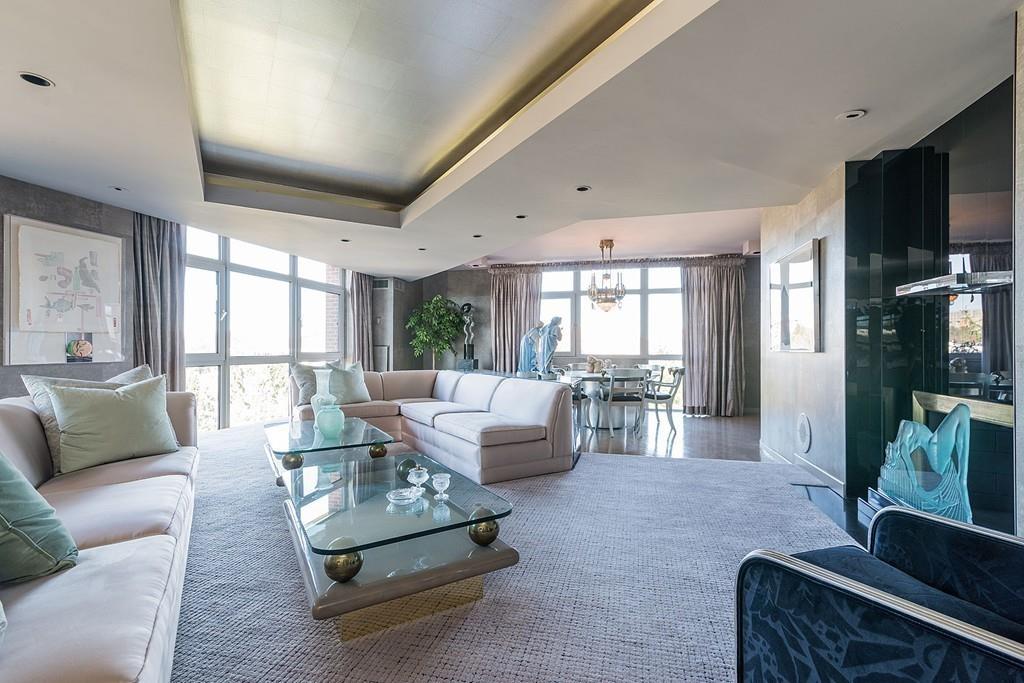
79 Florence Street, #600S, Chestnut Hill – One of the largest and most desirable units at Hampton Place! Endless options for the next resident in this corner penthouse with over 3,000 sq ft of living area with architectural details and 4 garage spaces! Bright and spacious fireplaced living room boasts tray ceiling and floor to ceiling windows offering gorgeous panoramic views. The living room flows into the dining room, large eat-in kitchen with island and cozy den. Both bedrooms are graciously sized with walk-in closets and large luxurious his and her en-suite bath for master bedroom. Laundry in-unit and tons of storage round out this penthouse. Building amenities include club house, exercise room, indoor/outdoor pools and 24/7 security. Close to Chestnut Hill shops, restaurants and Route 9. Contact me today for a private showing. Click here to view more.
Katrine and Stephen Campbell were up against stiff competition from 10 other bidders for the Reading home they wanted to buy. So the couple tried an aggressive strategy to give them an edge: Instead of making a specific offer, they promised to top whatever turned out to be the high bid by an additional $5,000.
The increasingly popular tactic, known as an escalation clause, worked. The Campbells bought the four-bedroom house late last year for $597,000 — or $18,000 above the original list price, including the extra $5,000.
In a sign of how competitive the Boston-area housing market has become, the maneuver is becoming part of the area’s bidding war landscape, brokers and other real estate executives say. Some report there hasn’t been this much escalation clause activity since the last house-buying frenzy 10 years ago.
There are several kinds of escalation clauses, but all involve an agreement to top the high bid on a home by a set amount of money — often $5,000, and sometimes more.
Potential buyers who offer such arrangements usually insist on a brief amount of time, an hour or less, to follow through or to back out once a top bid has been established.
Skeptics say the clauses are potentially risky and a needless ploy that could backfire by alienating some sellers. It can also lead to disputes about whether buyers or sellers have complied with escalation clause terms, they say.
“It’s a tactic that’s not going to appeal to everyone,” said Peter Ruffini, a regional vice president at Jack Conway Realty in Norwell and president of the Massachusetts Association of Realtors.
“It sounds a little risky to me. It sounds sort of like issuing a blank check to sellers.”
But brokers who use escalation clauses say the tactic is legitimate and works. They say it’s no blank check if the proposal is crafted correctly.
“I use them all the time now,” said Ryan Wilson, a real estate agent at Chestnut Hill’s Wilson Group, affiliated with Keller Williams Realty.
Wilson said about 75 percent of the offers he now crafts with potential buyers include escalation clauses.
“Escalation clauses are not yet that widespread with other agents, but they’re gaining popularity,” Wilson said.
When Sara Barbuto and Kate Marciniec were looking for a home, they engaged the same broker who represented the Campbells: Ramsay Fretz in the Boston office of RE/MAX Leading Edge, a firm considered aggressive in its use of escalation clauses.
But the house hunters employed a slightly different strategy once they set their sights on a three-bedroom home in Melrose, which was listed for $449,000.
Barbuto and Marciniec thought the asking price was too high because the home needed repairs.
So they bid $25,000 below the list price, the same amount offered by another potential buyer. Then the seller asked the two bidders for their “best and final offer.”
Instead, Barbuto and Marciniec provided a written escalation clause. They promised to beat the other bidder by $5,000, if given an hour to decide whether the price was right. The tactic worked, and they bought the home for $443,000.
“It’s a very interesting negotiating concept,” said Barbuto, who, with Marciniec, had previously bid on seven other homes without using escalation clauses.
Each time they lost out to higher offers.
The use of escalation clauses raises an obvious question: Couldn’t a seller make up a fictitious high-bid figure to command even more money from someone promising to top the best offer? That’s possible but unlikely, brokers say.
Fretz and other real estate agents say they always include a written provision requiring sellers who agree to an escalation clause to produce copies of “bona fide offers” from other bidders and preapproved mortgage documents, with the names of other bidders blacked out.
In practice, the brokers say, they usually don’t ask for documented proof because they know and trust agents representing sellers.
Despite the growing popularity of escalation clauses, some brokers question whether they are really needed very often.
In the event of a bidding war in which buyers offer the same price, sellers can always demand a “best and final offer” from bidders — and that’s it, said Tom Grimshaw of Gibson Sotheby’s International Reality in Boston.
Sellers can then even proceed to a second best-and-final round if there’s another tie, he said.
Brian Montgomery, an agent at Charlesgate Realty Group in Boston, said some sellers are caught off guard and even upset when a bid includes an escalation clause. Some refuse to deal with such bidders.
“The seller figures, why not just give me your highest offer?” Montgomery said. “The tactic can sometimes do more harm than good for a buyer.”
Still, Montgomery said, there are times when he has used escalation clauses over the past year, particularly when a buyer is really intent on purchasing a home.
Ashley Stolba, an associate counsel at the Massachusetts Association of Realtors, said a seller is not legally required to accept an escalation clause offer.
Under Massachusetts law, sellers have wide discretion to reject or accept offers, for any reason, as long as they don’t discriminate against people based on race, religion, sex, or other nonbusiness criteria, she said.
Stolba said she is not aware of any lawsuits so far involving escalation clauses, although she added that she is starting to field more calls from brokers who want to learn more about the tactic.
Shared from http://www.BostonGlobe.com/business

WALTHAM, Mass. – March 11, 2014 – The Massachusetts Association of REALTORS® (MAR) reported today that the real estate market continued its strong start to 2014 as pending home sales for both single-family homes and condominiums went up again in February compared to the same month in 2013. Pending sales figures (also called homes under agreement) are a leading indicator of actual housing sales in Massachusetts for the following 2-3 months.
“The snow and cold of last month didn’t dampen buyer demand as pending sales increased again in February,” said 2014 MAR President Peter Ruffini, regional vice president at Jack Conway & Co. “With the economy improving and interest rates still favorable, qualified buyers made enough accepted offers to make this February the most active since February 2004.”
The number of single-family homes put under agreement in February was up 20.4 percent compared to the same time last year (3,587 homes in 2014 from 2,980 homes in 2013). This is the 12th straight month of year-over-year increases. This is the most homes put under agreement in February since 2004 when there were 3,612 homes. On a month-to-month basis, single-family homes put under agreement went up 13.8 percent compared to 3,151 homes put under agreement in January. “Sellers should be encouraged by the continued strong buyer demand,” said Ruffini. “This trend will hopefully, help increase the inventory of homes for sale in the coming spring market. With values on the rise, it’s a good time to sell for more homeowners now than at any time in the past five years.”
The median sales price of single-family homes put under agreement in February was $295,600, which was up 7.5 percent from $275,000 in 2013. On a month-to-month basis, under agreement median prices were down 7.7 percent from $320,000 in January.
In this market, REALTORS® are cautioning homeowners about the decision to increase the size of the home they’re in rather than moving to a larger home. “Over-improvement can result in houses that are out of step with the neighborhood, won’t recoup the investment and/or will permanently remove affordable homes from the stock available for first-time buyers,” said Ruffini.
The number of condos put under agreement in February was up 17 percent compared to February 2013 (1,533 units in 2014 from 1,310 units in 2013). This is the most number of condos put under agreement in February since 2007 when 1,777 units were put under agreement. On a month-to-month basis, condos put under agreement went up 7.9 percent from 1,421 units in January.
The median sales price of a condo put under agreement in February was $282,500 which was up 8.9 percent from $259,450 in 2013. On a month-to-month basis, under agreement median prices were down 5.9 percent from $300,000 in January.
About Pending Sales:
The tracking of signed purchase and sales agreements (also called “pending sales”) provide reliable information about where the real estate market is heading in coming months.
A pending sale or a sale “under agreement” is when the buyer and seller agree on the terms of the sale of a home and have a signed purchase and sale agreement, but have yet to close and be recorded as such. MAR is the only organization which compiles this statewide information from Multiple Listing Services each month.
The Data:
Monthly pending (or under agreement) data and closed sales data comes from the three REALTOR®-affiliated Multiple Listing Services in Massachusetts. They are the Berkshire County Multiple Listing Service, Cape Cod & Islands Association of REALTORS® Multiple Listing Service, Inc.; and MLS Property Information Network, Inc. The data is compiled by 10K Research and Marketing, Inc. and updated each month. As a result, previous data may change after the reports have been run.
About the Massachusetts Association of REALTORS®:
Organized in 1924, the Massachusetts Association of REALTORS® is a professional trade organization with more than 19,000+ members. The term REALTOR® is registered as the exclusive designation of members of the National Association of REALTORS® who subscribe to a strict code of ethics and enjoy continuing education programs.
 Susan Mammola Newton Real Estate