Home Prices in Greater Boston Soared in the First Months of 2015

Courtesy of Scott Van Voorhis and Boston.com Correspondent

The spring market has kicked off with a bang, with big hikes in home and condo prices in some of the hottest markets across Greater Boston.

Double-digit increases in prices have pushed real estate values deep into record territory in Cambridge, Somerville, Brookline and a number of suburban towns as well.

The median price of the homes sold in Cambridge during the first three months of 2015 hit $1.3 million, up 34 percent from last spring, while in Somerville it reached $590,000 after an 18 percent jump, according to The Warren Group, which tracks sales and home and condo prices statewide.

At $1.3 million, Cambridge’s median home price is more than double what it was back during the first three months of 2005, when it was $667,500.

The median price of a home in Brookline reached a stunning $1.7 million after a 16 percent jump during the first quarter, making it the most expensive place in the state to buy a single-family, barring the occasional sale of a Back Bay or Beacon Hill mansion.

And Needham’s median price ($980,000) is closing in on the $1 million mark after a 16 percent increase, Warren Group numbers show.

A home in Cambridge, where home prices are higher than they’ve been in a decade.

Aram Boghosian/Boston Globe

By contrast, the median price of homes across the state rose during the first quarter by a more modest 4 percent, to $317,500, while home sales rose by 1.3 percent. Statewide, the median condo price rose 2.4 percent during the same period, to $297,000, even as sales fell 6 percent, The Warren Group reports.

“The spring market is in full swing,” said Elaine Bannigan, owner of Pinnacle Residential Properties in Wellesley. “There are homes to look at and buyers are out there in force.”

Other towns where median prices rose by double digits included:

Nor was it just wealthy or relatively affluent zip codes that have seen big price increases so far this year:

In Boston, Dorchester’s median price soared 30 percent to $375,000 while Hyde Park’s jumped by about 14 percent, to $319,000, Warren Group stats show.

Everett, where Steve Wynn is laying plans for a $1.7 billion casino, saw its median home price rise 17 percent, to $316,500.

Median condo prices also surged in a number of local neighborhoods.

The median price in Charlestown rose 36 percent to $575,000, while East Boston, which is seeing a wave of new waterfront condos and apartment under construction, saw a nearly 30 percent gain, to $352,000.

The median condo price in Jamaica Plain rose 13 percent, to $414,000, while Cambridge saw an 8 percent jump, to $575,000.

Meanwhile, a number of towns and neighborhoods have blown past home price highs set back in 2005, the peak of the last boom.

At $1.3 million, Cambridge’s median home price is more than double what it was back during the first three months of 2005, when it was $667,500, while the median price of a home in Somerville back in the spring of 2005 was $428,500, not $590,000, as it is today, Warren Group numbers show.

Needham’s median price of $980,000 represents a nearly 50 percent increase over a decade ago, when it was $663,750.
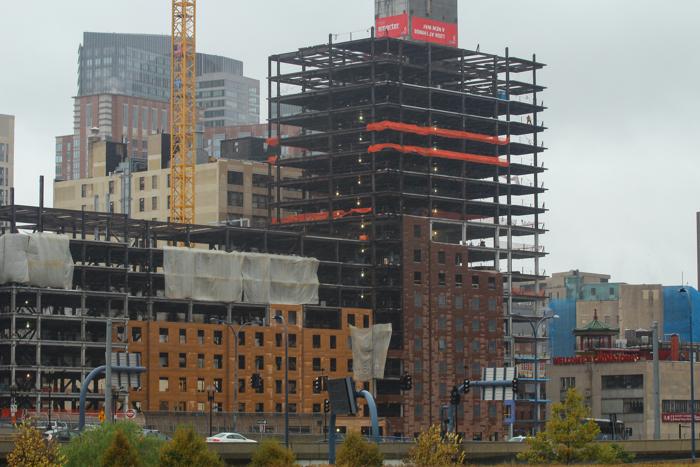
– See more at: http://www.boston.com/real-estate/news/2015/04/30/home-prices-greater-boston-soared-the-first-months/9NQye9kleG8XADq1wKGFBJ/story.html#sthash.QZofV1xR.dpuf

Zillow: Millennials Will Be Biggest Home-Buying Bloc by End of 2015

Zillow has a prediction that ought to surprise young people feeling trapped in Boston’s rental cycle: By the end of next year, millennials will overtake Gen X’ers as the country’s biggest bloc of home-buyers.

The company forecasts 2015 will be a promising year for those trying to buy a home for the first time. After looking at factors like income growth, new home construction and increases in rental prices, it’s economists talked directly to potential homebuyers.

“Roughly 42% of millennials say they want to buy a home in the next one to five years, compared to just 31% of Generation X,” said Dr. Stan Humphries, Zillow’s chief economist, in a statement.

“The lack of home-buying activity from millennials thus far is decidedly not because this generation isn’t interested in homeownership,” he said, “but instead because younger Americans have been delaying getting married and having children, two key drivers in the decision to buy that first home. As this generation matures, they will become a home-buying force to be reckoned with.”

Michael Breer, a Boston real estate blogger, sees the same trend locally. “A lot of millennials are coming of age,” he said. Breer, who is also an agent with Sotheby’s International Realty, notes that in the Boston region, banks seem more willing than they were a few years ago to give mortgage loans to millennials – a major hurdle for the first-time home-buyer.

Still, millennials (those under 35 years old) have a lot of ground to make up on Generation X (35-50 years old) and the rest of the U.S. population. A September report from Redfin real estate brokerage said only 42% of millennials nationwide own homes, compared to 65% of the general population.

That gap is much, much bigger in the Boston metro region. According to Zillow’s numbers, only 19% of millennials in Boston, Cambridge and Newton currently own homes, compared to 61% of Gen X’ers and 77% of Baby Boomers. Zillow says the local gulf in ownership is worse than all but five other cities in the whole country.

It’s not a surprise there are relatively few millennial homeowners in Boston, given the competitive market new buyers face. There’s also the problem of matching the high expectations of young people looking to live in trendy areas like the South End, Beacon Hill or Back Bay with the financial realities there.

“You look at the neighborhoods that are desirable for millennials and they’re just not affordable,” said Breer. “Even in a place like Somerville, you’re probably looking at $300,000 to $500,000 for a studio or a one-bedroom.” Breer says under those conditions, young people are likely to rent for a few years in hot neighborhoods before looking to buy somewhere cheaper.

If Boston is going to catch the newly predicted wave of millennial homebuyers, it has to reverse that trend soon, which isn’t likely. For 2015, Boston ranks low among large cities on Zillow’s list of best places for likely first-time buyers – below even notoriously expensive markets like New York and San Francisco.

A big reason Boston is rated as unfavorable to first-time buyers is slow growth in the low-end housing market, a bracket millennials are most likely to land. According to Zillow, Boston has only 6% more units available in that market than it did a year ago. On the other end of the spectrum there’s Las Vegas, which has about 85% more bottom tier homes than it did last October.

Rich Hornblower, a broker with Coldwell Banker who also spoke to Boston.com last month about the tough first-timers market, is holding out hope for the future. He points to a number of projects underway at the Boston Redevelopment Authority, some of which include affordable housing units, as proof the city is trying to attract younger buyers.

“I think as the city keeps on improving and getting better we’re going to see more people trying to set their roots,” Hornblower said. “I think [millennial home ownership] will go up as Boston becomes more of a destination for people trying to stay after college.”

He also thinks young Bostonians will get sick of constantly rising rents and start to long for the stability of a fixed mortgage payment – another major factor in Zillow’s forecast. “They can get a fixed cost, know that they can live in the city and stay there,” Hornblower said. “That’s really valuable versus renting, especially in the downtown area where rents can go up year to year and you have no control over it.”

Tight housing market drives rising bids

Tight market drives escalation clause use

Katrine and Stephen Campbell were up against stiff competition from 10 other bidders for the Reading home they wanted to buy. So the couple tried an aggressive strategy to give them an edge: Instead of making a specific offer, they promised to top whatever turned out to be the high bid by an additional $5,000.

The increasingly popular tactic, known as an escalation clause, worked. The Campbells bought the four-bedroom house late last year for $597,000 — or $18,000 above the original list price, including the extra $5,000.

In a sign of how competitive the Boston-area housing market has become, the maneuver is becoming part of the area’s bidding war landscape, brokers and other real estate executives say. Some report there hasn’t been this much escalation clause activity since the last house-buying frenzy 10 years ago.

There are several kinds of escalation clauses, but all involve an agreement to top the high bid on a home by a set amount of money — often $5,000, and sometimes more.

Potential buyers who offer such arrangements usually insist on a brief amount of time, an hour or less, to follow through or to back out once a top bid has been established.

Skeptics say the clauses are potentially risky and a needless ploy that could backfire by alienating some sellers. It can also lead to disputes about whether buyers or sellers have complied with escalation clause terms, they say.

“It’s a tactic that’s not going to appeal to everyone,” said Peter Ruffini, a regional vice president at Jack Conway Realty in Norwell and president of the Massachusetts Association of Realtors.

“It sounds a little risky to me. It sounds sort of like issuing a blank check to sellers.”

But brokers who use escalation clauses say the tactic is legitimate and works. They say it’s no blank check if the proposal is crafted correctly.

“I use them all the time now,” said Ryan Wilson, a real estate agent at Chestnut Hill’s Wilson Group, affiliated with Keller Williams Realty.

Wilson said about 75 percent of the offers he now crafts with potential buyers include escalation clauses.

“Escalation clauses are not yet that widespread with other agents, but they’re gaining popularity,” Wilson said.

When Sara Barbuto and Kate Marciniec were looking for a home, they engaged the same broker who represented the Campbells: Ramsay Fretz in the Boston office of RE/MAX Leading Edge, a firm considered aggressive in its use of escalation clauses.

But the house hunters employed a slightly different strategy once they set their sights on a three-bedroom home in Melrose, which was listed for $449,000.

Barbuto and Marciniec thought the asking price was too high because the home needed repairs.

So they bid $25,000 below the list price, the same amount offered by another potential buyer. Then the seller asked the two bidders for their “best and final offer.”

Instead, Barbuto and Marciniec provided a written escalation clause. They promised to beat the other bidder by $5,000, if given an hour to decide whether the price was right. The tactic worked, and they bought the home for $443,000.

“It’s a very interesting negotiating concept,” said Barbuto, who, with Marciniec, had previously bid on seven other homes without using escalation clauses.

Each time they lost out to higher offers.

The use of escalation clauses raises an obvious question: Couldn’t a seller make up a fictitious high-bid figure to command even more money from someone promising to top the best offer? That’s possible but unlikely, brokers say.

Fretz and other real estate agents say they always include a written provision requiring sellers who agree to an escalation clause to produce copies of “bona fide offers” from other bidders and preapproved mortgage documents, with the names of other bidders blacked out.

In practice, the brokers say, they usually don’t ask for documented proof because they know and trust agents representing sellers.

Despite the growing popularity of escalation clauses, some brokers question whether they are really needed very often.

In the event of a bidding war in which buyers offer the same price, sellers can always demand a “best and final offer” from bidders — and that’s it, said Tom Grimshaw of Gibson Sotheby’s International Reality in Boston.

Sellers can then even proceed to a second best-and-final round if there’s another tie, he said.

Brian Montgomery, an agent at Charlesgate Realty Group in Boston, said some sellers are caught off guard and even upset when a bid includes an escalation clause. Some refuse to deal with such bidders.

“The seller figures, why not just give me your highest offer?” Montgomery said. “The tactic can sometimes do more harm than good for a buyer.”

Still, Montgomery said, there are times when he has used escalation clauses over the past year, particularly when a buyer is really intent on purchasing a home.

Ashley Stolba, an associate counsel at the Massachusetts Association of Realtors, said a seller is not legally required to accept an escalation clause offer.

Under Massachusetts law, sellers have wide discretion to reject or accept offers, for any reason, as long as they don’t discriminate against people based on race, religion, sex, or other nonbusiness criteria, she said.

Stolba said she is not aware of any lawsuits so far involving escalation clauses, although she added that she is starting to field more calls from brokers who want to learn more about the tactic.

Shared from http://www.BostonGlobe.com/business