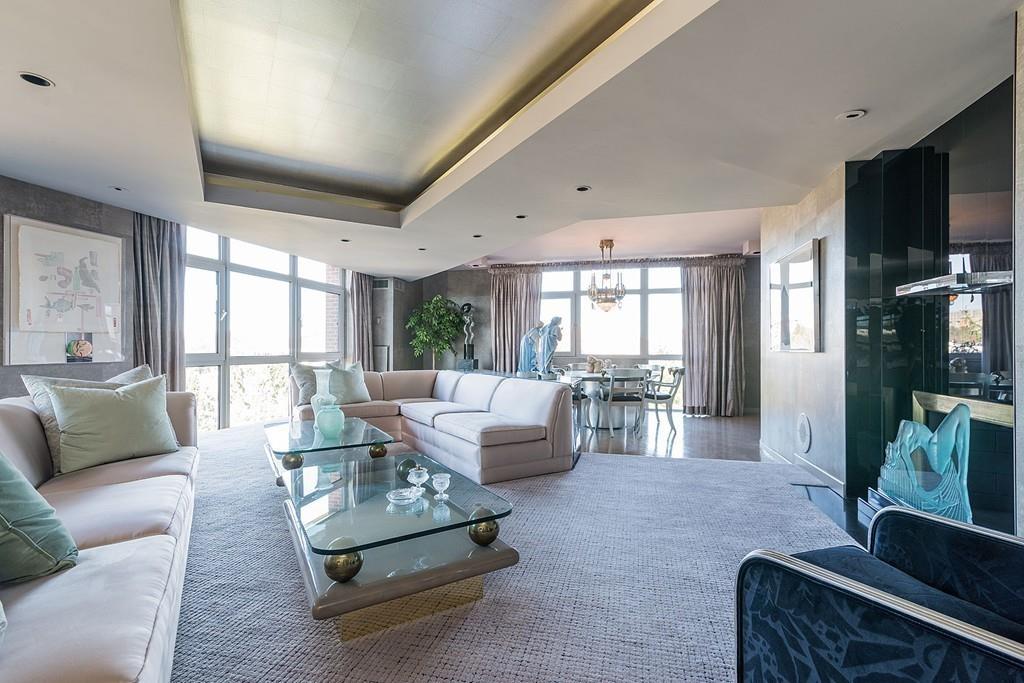
79 Florence Street, #600S, Chestnut Hill – One of the largest and most desirable units at Hampton Place! Endless options for the next resident in this corner penthouse with over 3,000 sq ft of living area with architectural details and 4 garage spaces! Bright and spacious fireplaced living room boasts tray ceiling and floor to ceiling windows offering gorgeous panoramic views. The living room flows into the dining room, large eat-in kitchen with island and cozy den. Both bedrooms are graciously sized with walk-in closets and large luxurious his and her en-suite bath for master bedroom. Laundry in-unit and tons of storage round out this penthouse. Building amenities include club house, exercise room, indoor/outdoor pools and 24/7 security. Close to Chestnut Hill shops, restaurants and Route 9. Contact me today for a private showing. Click here to view more.
Tag Archives: Boston Real Estate
Home Prices in Greater Boston Soared in the First Months of 2015
Courtesy of Scott Van Voorhis and Boston.com Correspondent
The spring market has kicked off with a bang, with big hikes in home and condo prices in some of the hottest markets across Greater Boston.
Double-digit increases in prices have pushed real estate values deep into record territory in Cambridge, Somerville, Brookline and a number of suburban towns as well.
The median price of the homes sold in Cambridge during the first three months of 2015 hit $1.3 million, up 34 percent from last spring, while in Somerville it reached $590,000 after an 18 percent jump, according to The Warren Group, which tracks sales and home and condo prices statewide.
At $1.3 million, Cambridge’s median home price is more than double what it was back during the first three months of 2005, when it was $667,500.
The median price of a home in Brookline reached a stunning $1.7 million after a 16 percent jump during the first quarter, making it the most expensive place in the state to buy a single-family, barring the occasional sale of a Back Bay or Beacon Hill mansion.
And Needham’s median price ($980,000) is closing in on the $1 million mark after a 16 percent increase, Warren Group numbers show.

By contrast, the median price of homes across the state rose during the first quarter by a more modest 4 percent, to $317,500, while home sales rose by 1.3 percent. Statewide, the median condo price rose 2.4 percent during the same period, to $297,000, even as sales fell 6 percent, The Warren Group reports.
“The spring market is in full swing,” said Elaine Bannigan, owner of Pinnacle Residential Properties in Wellesley. “There are homes to look at and buyers are out there in force.”
Other towns where median prices rose by double digits included:

Nor was it just wealthy or relatively affluent zip codes that have seen big price increases so far this year:

In Boston, Dorchester’s median price soared 30 percent to $375,000 while Hyde Park’s jumped by about 14 percent, to $319,000, Warren Group stats show.
Everett, where Steve Wynn is laying plans for a $1.7 billion casino, saw its median home price rise 17 percent, to $316,500.
Median condo prices also surged in a number of local neighborhoods.
The median price in Charlestown rose 36 percent to $575,000, while East Boston, which is seeing a wave of new waterfront condos and apartment under construction, saw a nearly 30 percent gain, to $352,000.
The median condo price in Jamaica Plain rose 13 percent, to $414,000, while Cambridge saw an 8 percent jump, to $575,000.
Meanwhile, a number of towns and neighborhoods have blown past home price highs set back in 2005, the peak of the last boom.
At $1.3 million, Cambridge’s median home price is more than double what it was back during the first three months of 2005, when it was $667,500, while the median price of a home in Somerville back in the spring of 2005 was $428,500, not $590,000, as it is today, Warren Group numbers show.
Needham’s median price of $980,000 represents a nearly 50 percent increase over a decade ago, when it was $663,750.
Zillow: Millennials Will Be Biggest Home-Buying Bloc by End of 2015
Zillow has a prediction that ought to surprise young people feeling trapped in Boston’s rental cycle: By the end of next year, millennials will overtake Gen X’ers as the country’s biggest bloc of home-buyers.
The company forecasts 2015 will be a promising year for those trying to buy a home for the first time. After looking at factors like income growth, new home construction and increases in rental prices, it’s economists talked directly to potential homebuyers.
“Roughly 42% of millennials say they want to buy a home in the next one to five years, compared to just 31% of Generation X,” said Dr. Stan Humphries, Zillow’s chief economist, in a statement.
“The lack of home-buying activity from millennials thus far is decidedly not because this generation isn’t interested in homeownership,” he said, “but instead because younger Americans have been delaying getting married and having children, two key drivers in the decision to buy that first home. As this generation matures, they will become a home-buying force to be reckoned with.”
Michael Breer, a Boston real estate blogger, sees the same trend locally. “A lot of millennials are coming of age,” he said. Breer, who is also an agent with Sotheby’s International Realty, notes that in the Boston region, banks seem more willing than they were a few years ago to give mortgage loans to millennials – a major hurdle for the first-time home-buyer.
Still, millennials (those under 35 years old) have a lot of ground to make up on Generation X (35-50 years old) and the rest of the U.S. population. A September report from Redfin real estate brokerage said only 42% of millennials nationwide own homes, compared to 65% of the general population.
That gap is much, much bigger in the Boston metro region. According to Zillow’s numbers, only 19% of millennials in Boston, Cambridge and Newton currently own homes, compared to 61% of Gen X’ers and 77% of Baby Boomers. Zillow says the local gulf in ownership is worse than all but five other cities in the whole country.
It’s not a surprise there are relatively few millennial homeowners in Boston, given the competitive market new buyers face. There’s also the problem of matching the high expectations of young people looking to live in trendy areas like the South End, Beacon Hill or Back Bay with the financial realities there.
“You look at the neighborhoods that are desirable for millennials and they’re just not affordable,” said Breer. “Even in a place like Somerville, you’re probably looking at $300,000 to $500,000 for a studio or a one-bedroom.” Breer says under those conditions, young people are likely to rent for a few years in hot neighborhoods before looking to buy somewhere cheaper.
If Boston is going to catch the newly predicted wave of millennial homebuyers, it has to reverse that trend soon, which isn’t likely. For 2015, Boston ranks low among large cities on Zillow’s list of best places for likely first-time buyers – below even notoriously expensive markets like New York and San Francisco.
A big reason Boston is rated as unfavorable to first-time buyers is slow growth in the low-end housing market, a bracket millennials are most likely to land. According to Zillow, Boston has only 6% more units available in that market than it did a year ago. On the other end of the spectrum there’s Las Vegas, which has about 85% more bottom tier homes than it did last October.
Rich Hornblower, a broker with Coldwell Banker who also spoke to Boston.com last month about the tough first-timers market, is holding out hope for the future. He points to a number of projects underway at the Boston Redevelopment Authority, some of which include affordable housing units, as proof the city is trying to attract younger buyers.
“I think as the city keeps on improving and getting better we’re going to see more people trying to set their roots,” Hornblower said. “I think [millennial home ownership] will go up as Boston becomes more of a destination for people trying to stay after college.”
He also thinks young Bostonians will get sick of constantly rising rents and start to long for the stability of a fixed mortgage payment – another major factor in Zillow’s forecast. “They can get a fixed cost, know that they can live in the city and stay there,” Hornblower said. “That’s really valuable versus renting, especially in the downtown area where rents can go up year to year and you have no control over it.”
7 Steps to Buying a Home
1. Define your needs.
Congratulations on your decision to purchase a new home! Before you begin your search, you need to define what kind of home and neighborhood would best suit your desires and needs. Then, make a “must-have” list for qualities in your future home that are non-negotiable. To further define your needs, you may want to divide your lists into negotiable and non-negotiable items, so your agent can operate with some flexibility when scouting for homes on your behalf. Share this list with your real estate agent. The more specific your criteria is, the more effective your home search will be.
2. Get Pre-approved.
Now that you know what you want in a home and neighborhood, you need to find out what you can truly afford. Ask your real estate agent for a list of trusted mortgage professionals to begin the pre-approval process for a home loan.
Your pre-approved status lets the seller know:
- You have gone through an extensive financial background check.
- A lender is willing to do business with you.
- The likelihood of unexpected obstacles regarding financing is minimal.
3. Begin the Search
Now you are ready to embark on your home search. The most efficient route is to allow your real estate agent to do the initial scouting for you. Using your “must-have” list as a guide, your agent will alert you of new and existing listings that have strong potential. If these listings pique your interest, your agent will arrange home tours at your convenience. Many agents send alerts via MLS email – sometimes as often as daily, depending on the available inventory in your market.
You also can do some research on your own. Read local real estate publications, contact your local neighborhood associations, visit the local chamber of commerce, surf the Internet, or drive around your favorite neighborhoods. While these methods certainly can lead to your dream home, it’s important to note that 82 percent of home sales are the result of agent connections.
4. Make an offer with your Buyer’s Agent
When you’re ready to make an offer on a home, your buyer’s agent will help you determine the offer price by reviewing recent sales of homes similar in size, quality and amenities called “comps.” With your input, she will draft a written contract that outlines what needs to be done by both parties to execute the transaction. If the seller accepts the offer, the document becomes a binding agreement, so it is imperative that you carefully review it with your agent. It’s important to note that if the seller changes any aspect of the offer, it is not a binding agreement until the buyer agrees to the seller’s changes.
Strike a deal.
Sometimes, you get lucky and the seller accepts your offer as is. However, in most instances, the seller will make a counteroffer. This is where your real estate agent’s experience in negotiations will be invaluable. Keep in mind almost everything is negotiable when you are buying a home. This can give you a great deal of leverage in the buying process – that is, if you have adequate information and you use it in an appropriate manner.
Remain in close contact with your real estate agent so you can quickly review any changes from the seller. Remember: Bargaining is not a winner-take-all deal. It is a business process that involves compromise and mutual respect.
5. Prepare for the closing with your Attorney and Buyer’s Agent.
When an offer becomes a binding agreement, your agent will help you tackle the checklist of action items that you, as the buyer, have agreed to perform prior to closing. Depending on how the responsibilities are divvied up in the agreement, this is typically when you will:
- Conduct a home inspection.
- Get an appraisal and finalize your financing.
- Secure title insurance.
Having these procedures done in a timely and professional manner is a must, as any delays could threaten a successful closing. Your agent will serve as your advocate, helping to coordinate activities and making sure the vendors have access to the property to perform their jobs.
6. Close the deal.
Congratulations! The closing is where home ownership is legally transferred from the seller to the buyer. It is a formal meeting that most parties involved in the transaction will attend. Closing procedures usually are held at the title company’s or lawyer’s office. The closing officer will coordinate all the document-signing and the collection and disbursement of funds. A few days before your closing date, your lender will send a final closing statement that outlines your closing costs, if applicable. Your real estate agent will review this document with you to ensure its accuracy, as well as help you gather any necessary documentation that you’ll need to bring to closing.
7. Celebrate!
Drones fly with Massachusetts Users
Some Bay State businesses are already putting drones in the air to boost their bottom line as the Federal Aviation Administration hints it may be open to some commercial uses of the hovering craft.
“It’s a novelty now, but I think it will become more of a mainstay,” said Missy Cummings, a drone expert at MIT. “These drones can really improve business processes.”
Lexington Realtor Jonathan de Araujo has been using a drone to take aerial shots of properties he is listing since last summer, and the birds-eye view has quickly found a place in de Araujo’s real estate arsenal.
“The end result is just unparalleled,” he said. “Everything we can do to give a more positive impression means more people at the open house. The idea is to just give a better, more positive, a more thorough impression of what you’re looking at.”
De Araujo uses his drone, a model outfitted with a camera and available to any consumer, to give his homes more context, including offering a complete view of a backyard, or showing how close the park down the street is.
“When you’re taking stills from ground level, you’re seeing one angle, one shot,” he said. “It just made sense to add that extra dimension.”
Last week, the FAA said it is considering letting seven movie and television filming companies use drones. Now, the only commercial drone flights permitted by the FAA are those by one company off the Alaskan coast. The FAA has been working for the past decade on potential safety regulations that would allow widespread commercial drone use, but those regulations have been repeatedly delayed. Most recently, the FAA has said it will release proposed regulations for operating small drones by November. That would be followed by a potentially yearslong process to finalize the regulations.
Dan Kara, a robotics and drone industry analyst with Myria Research, said the FAA is under pressure to clarify the guidelines because many, from individual real estate agents to Amazon.com, are using or expressing interest in making drones part of their toolkit.
“It’s happening organically,” Kara said.
Marcella Hoekstra, who runs wedding video company Heirloom Pictures, is planning on buying a drone soon.
“I’ve seen what these drones can do, and I’ve seen some really beautiful, sweeping shots of landscapes and architecture,” Hoekstra said. “It’s a wonderful way to explore … and give the bride and groom a bird’s-eye view.”
Kara said some are looking to drones for the novelty — a club in Las Vegas is delivering high end champagne to its high-rollers by drone.
But others are advocating for the permitted use of drones for search and rescue missions, to get a good view of wildfires and to help farmers track their crops.
“There’s no question drones can revolutionize (agriculture),” Cummings said.
Tight housing market drives rising bids
Tight market drives escalation clause use
Katrine and Stephen Campbell were up against stiff competition from 10 other bidders for the Reading home they wanted to buy. So the couple tried an aggressive strategy to give them an edge: Instead of making a specific offer, they promised to top whatever turned out to be the high bid by an additional $5,000.
The increasingly popular tactic, known as an escalation clause, worked. The Campbells bought the four-bedroom house late last year for $597,000 — or $18,000 above the original list price, including the extra $5,000.
In a sign of how competitive the Boston-area housing market has become, the maneuver is becoming part of the area’s bidding war landscape, brokers and other real estate executives say. Some report there hasn’t been this much escalation clause activity since the last house-buying frenzy 10 years ago.
There are several kinds of escalation clauses, but all involve an agreement to top the high bid on a home by a set amount of money — often $5,000, and sometimes more.
Potential buyers who offer such arrangements usually insist on a brief amount of time, an hour or less, to follow through or to back out once a top bid has been established.
Skeptics say the clauses are potentially risky and a needless ploy that could backfire by alienating some sellers. It can also lead to disputes about whether buyers or sellers have complied with escalation clause terms, they say.
“It’s a tactic that’s not going to appeal to everyone,” said Peter Ruffini, a regional vice president at Jack Conway Realty in Norwell and president of the Massachusetts Association of Realtors.
“It sounds a little risky to me. It sounds sort of like issuing a blank check to sellers.”
But brokers who use escalation clauses say the tactic is legitimate and works. They say it’s no blank check if the proposal is crafted correctly.
“I use them all the time now,” said Ryan Wilson, a real estate agent at Chestnut Hill’s Wilson Group, affiliated with Keller Williams Realty.
Wilson said about 75 percent of the offers he now crafts with potential buyers include escalation clauses.
“Escalation clauses are not yet that widespread with other agents, but they’re gaining popularity,” Wilson said.
When Sara Barbuto and Kate Marciniec were looking for a home, they engaged the same broker who represented the Campbells: Ramsay Fretz in the Boston office of RE/MAX Leading Edge, a firm considered aggressive in its use of escalation clauses.
But the house hunters employed a slightly different strategy once they set their sights on a three-bedroom home in Melrose, which was listed for $449,000.
Barbuto and Marciniec thought the asking price was too high because the home needed repairs.
So they bid $25,000 below the list price, the same amount offered by another potential buyer. Then the seller asked the two bidders for their “best and final offer.”
Instead, Barbuto and Marciniec provided a written escalation clause. They promised to beat the other bidder by $5,000, if given an hour to decide whether the price was right. The tactic worked, and they bought the home for $443,000.
“It’s a very interesting negotiating concept,” said Barbuto, who, with Marciniec, had previously bid on seven other homes without using escalation clauses.
Each time they lost out to higher offers.
The use of escalation clauses raises an obvious question: Couldn’t a seller make up a fictitious high-bid figure to command even more money from someone promising to top the best offer? That’s possible but unlikely, brokers say.
Fretz and other real estate agents say they always include a written provision requiring sellers who agree to an escalation clause to produce copies of “bona fide offers” from other bidders and preapproved mortgage documents, with the names of other bidders blacked out.
In practice, the brokers say, they usually don’t ask for documented proof because they know and trust agents representing sellers.
Despite the growing popularity of escalation clauses, some brokers question whether they are really needed very often.
In the event of a bidding war in which buyers offer the same price, sellers can always demand a “best and final offer” from bidders — and that’s it, said Tom Grimshaw of Gibson Sotheby’s International Reality in Boston.
Sellers can then even proceed to a second best-and-final round if there’s another tie, he said.
Brian Montgomery, an agent at Charlesgate Realty Group in Boston, said some sellers are caught off guard and even upset when a bid includes an escalation clause. Some refuse to deal with such bidders.
“The seller figures, why not just give me your highest offer?” Montgomery said. “The tactic can sometimes do more harm than good for a buyer.”
Still, Montgomery said, there are times when he has used escalation clauses over the past year, particularly when a buyer is really intent on purchasing a home.
Ashley Stolba, an associate counsel at the Massachusetts Association of Realtors, said a seller is not legally required to accept an escalation clause offer.
Under Massachusetts law, sellers have wide discretion to reject or accept offers, for any reason, as long as they don’t discriminate against people based on race, religion, sex, or other nonbusiness criteria, she said.
Stolba said she is not aware of any lawsuits so far involving escalation clauses, although she added that she is starting to field more calls from brokers who want to learn more about the tactic.
Shared from http://www.BostonGlobe.com/business
Buyer Demand Continued to Push Pending Home Sales Up in February
WALTHAM, Mass. – March 11, 2014 – The Massachusetts Association of REALTORS® (MAR) reported today that the real estate market continued its strong start to 2014 as pending home sales for both single-family homes and condominiums went up again in February compared to the same month in 2013. Pending sales figures (also called homes under agreement) are a leading indicator of actual housing sales in Massachusetts for the following 2-3 months.
“The snow and cold of last month didn’t dampen buyer demand as pending sales increased again in February,” said 2014 MAR President Peter Ruffini, regional vice president at Jack Conway & Co. “With the economy improving and interest rates still favorable, qualified buyers made enough accepted offers to make this February the most active since February 2004.”
The number of single-family homes put under agreement in February was up 20.4 percent compared to the same time last year (3,587 homes in 2014 from 2,980 homes in 2013). This is the 12th straight month of year-over-year increases. This is the most homes put under agreement in February since 2004 when there were 3,612 homes. On a month-to-month basis, single-family homes put under agreement went up 13.8 percent compared to 3,151 homes put under agreement in January. “Sellers should be encouraged by the continued strong buyer demand,” said Ruffini. “This trend will hopefully, help increase the inventory of homes for sale in the coming spring market. With values on the rise, it’s a good time to sell for more homeowners now than at any time in the past five years.”
The median sales price of single-family homes put under agreement in February was $295,600, which was up 7.5 percent from $275,000 in 2013. On a month-to-month basis, under agreement median prices were down 7.7 percent from $320,000 in January.
In this market, REALTORS® are cautioning homeowners about the decision to increase the size of the home they’re in rather than moving to a larger home. “Over-improvement can result in houses that are out of step with the neighborhood, won’t recoup the investment and/or will permanently remove affordable homes from the stock available for first-time buyers,” said Ruffini.
The number of condos put under agreement in February was up 17 percent compared to February 2013 (1,533 units in 2014 from 1,310 units in 2013). This is the most number of condos put under agreement in February since 2007 when 1,777 units were put under agreement. On a month-to-month basis, condos put under agreement went up 7.9 percent from 1,421 units in January.
The median sales price of a condo put under agreement in February was $282,500 which was up 8.9 percent from $259,450 in 2013. On a month-to-month basis, under agreement median prices were down 5.9 percent from $300,000 in January.
About Pending Sales:
The tracking of signed purchase and sales agreements (also called “pending sales”) provide reliable information about where the real estate market is heading in coming months.
A pending sale or a sale “under agreement” is when the buyer and seller agree on the terms of the sale of a home and have a signed purchase and sale agreement, but have yet to close and be recorded as such. MAR is the only organization which compiles this statewide information from Multiple Listing Services each month.
The Data:
Monthly pending (or under agreement) data and closed sales data comes from the three REALTOR®-affiliated Multiple Listing Services in Massachusetts. They are the Berkshire County Multiple Listing Service, Cape Cod & Islands Association of REALTORS® Multiple Listing Service, Inc.; and MLS Property Information Network, Inc. The data is compiled by 10K Research and Marketing, Inc. and updated each month. As a result, previous data may change after the reports have been run.
About the Massachusetts Association of REALTORS®:
Organized in 1924, the Massachusetts Association of REALTORS® is a professional trade organization with more than 19,000+ members. The term REALTOR® is registered as the exclusive designation of members of the National Association of REALTORS® who subscribe to a strict code of ethics and enjoy continuing education programs.